


逆浸透
REVERSE OSMOSIS
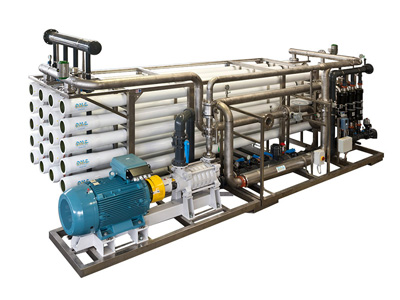
逆浸透は食塩水に浸水性膜(溶解固形物は不浸透)を接触させ、溶液の浸透圧より大きい圧力をかけた際に発生するプロセスです。元の溶液よりも塩分濃度の低い溶液(浸透性)は膜を通過しますが、塩分濃度の高い溶液(濃縮など)は、膜の外側に残ります。
逆浸透処理は装置の外側に圧力を掛けないときに発生する「直接」浸透処理の逆のプロセスです。
異なる濃度と含有物の2種類の溶液を別々の容器に入れ半浸透膜を挟んで接触させた場合、溶液は濃度の低いほうから高いほうへ流れ、濃い溶液の濃度が薄まります。流れが止まると濃度の高い溶液の浸透圧値が表示され、2つの溶液の違いが歴然とします。
逆浸透プロセスは、濃度の高い溶液に浸透圧以上の圧力をかけることによってのみ発生させることができます。圧を加えると濃度の高い溶液から低い溶液へ、溶媒が移動します。加える圧力を高くすると、浸透速度も上がります。
Reverse Osmosis is the process which occurs when a saline solution is put in contact with a water permeable membrane (but impermeable to the dissolved solids) at a pressure higher than the osmotic pressure of the solution. A solution (permeate) with a saline content lower than the original solution will pass through the membrane, while a salt rich solution (concentrate) will be determined outside the membrane.
The Reverse Osmosis process is the reverse of the “direct” osmosis process which occurs naturally in the absence of pressure external to the system. When two solutions of different concentration and content in two different containers are put in contact through a semi-permeable membrane, there is a flow from the less concentrated solution to the more concentrated solution, leading to a reduction of the concentration in the latter. At the end of the flow, an inequality between the two solutions is evident which represents the value of the osmotic pressure of the more concentrated solution.
The Reverse Osmosis process can occur only by applying a pressure higher than the osmotic pressure to the more concentrated solution, which allows the passage of the solvent from the concentrated solution to the less concentrated solution.
Higher the value of the pressure applied, higher the permeate flow.